Contents
| Folder | Reports |
|---|---|
| Date | |
| Source | GLIFWC |
| Author | Brandon Byrne, Inland Fisheries Biologist |
| Topics | Walleye, Walleye Regulation Change for 2027, General, Shoreline, Shoreline Habitat Education and Improvement, Bass, Musky |
| File | Presentation slides (PDF) (opens in a new tab) (PDF, 14.1 MB) |
1. Tribal Harvest Management and Status of Squirrel Lake Walleye Fishery
Brandon Byrne, GLIFWC Inland Fisheries Biologist
Squirrel Lake Walleye Initiative
Musky Shores Bar & Grill
June 17, 2026
2. Today’s Outline
- Ceded Territory Overview
- Tribal Harvest Management
- Squirrel Lake Walleye Fishery
- Closing Thoughts/Questions
Ceded Territory Overview
3. Great Lakes Indian Fish & Wildlife Commission
- Intertribal natural resource agency comprised of 11 Ojibwe member Tribes.
- Delegated authority of member Tribes to implement off-reservation, treaty-reserved rights in Ceded Territories.
- Entity of self-regulation.
4–5. Ceded Territory Overview
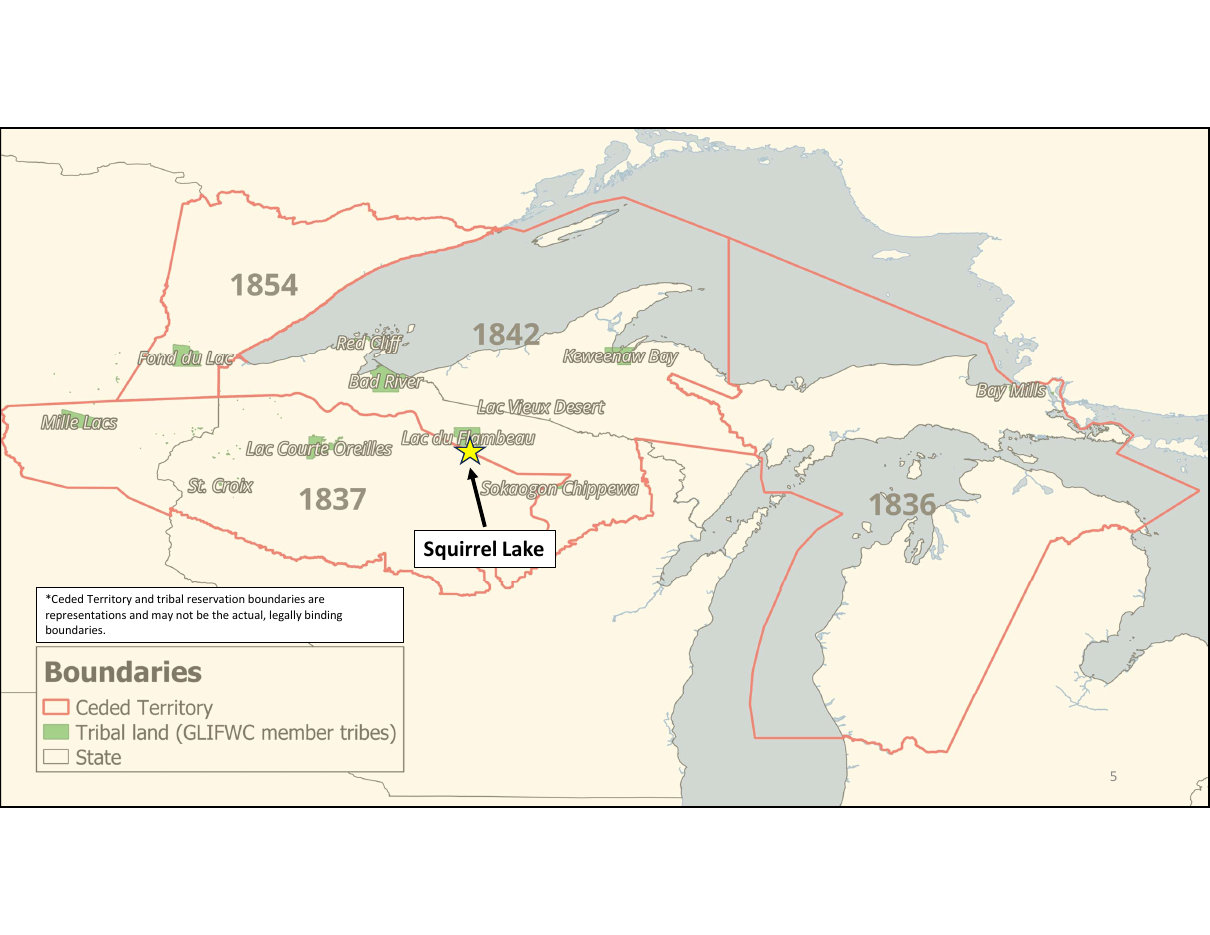
*Ceded Territory and tribal reservation boundaries are representations and may not be the actual, legally binding boundaries.
Tribal Harvest Management
7. Spearing and Netting Overview
- Harvesters must possess tribal ID and permit while spearing or netting
- Permits generally issued first-come, first-serve at tribal registration station or boat landing
- Bag limits per permit established by Tribe
8. Spearing and Netting Overview (cont’d)
- Creel clerks must be present at the boat landing for either activity to take place
- 20” maximum; one fish between 20-24”, and one of any size per permit
- Creel teams count, measure, and determine sex of catch
- Unused permits must be returned to designated monitoring location
9. Open-water Spearing Regulations
- Season open ice-on to ice-off
- Members may only spear lakes declared by Tribe using designated landings
- May not possess any other fishing gear while spearing
- Gear Requirements:
- Minimum three barbed tines, each ≥ 3” in length
10. Netting Regulations
- Season
- Fyke nets, dip nets, seines: Open year-round
- Gillnets: June 1 to March 1
- Gear Requirements
- Fyke nets:
- Must be identifiable in water and trackable
- Gillnets:
- May not exceed length and mesh size listed on permit
- Must be lifted at least two times in 24-hour period
- Restricted to lakes > 1,000 acres
- Fyke nets:
11. Safe Harvest Levels, Declarations, and Quotas, Oh My!
- Safe harvest is meant to be conservative and is based on population data
- Tribal quotas are a percentage of safe harvest
- Tribal harvest is fully monitored when spearing and netting occur
- Each fish is counted and quotas tracked
12. Safe Harvest
- Safe harvest in Wisconsin is derived such that combined tribal and angling exploitation should not exceed 35% of adult stock
- Tribes or GLIFWC Biological Services Director may close a lake to tribal harvest when necessary
13–16. 1,250 fish ± 250 → 1,000 fish → Safe Harvest = 350 fish
Squirrel Lake Walleye Fishery
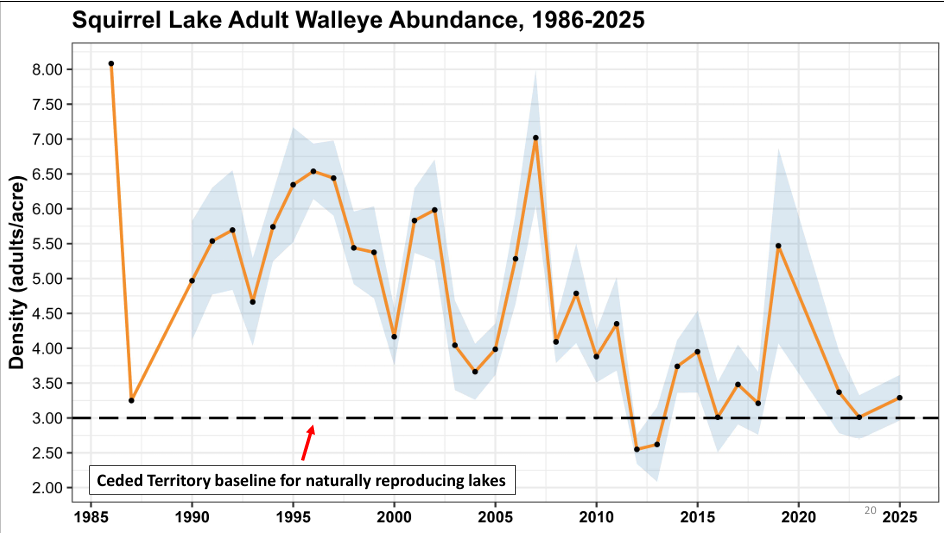
19–20. Squirrel Lake Adult Walleye Abundance, 1986-2025
21. Mark-Recapture Surveys
- Northern Wisconsin and western Upper Peninsula
- Lakes surveyed semi-annually to roughly every five years
- Long-term study lakes elucidate life histories of individual fishes
22. Report Your Tagged Fish!
www.glifwc.org/report-tagged-fish
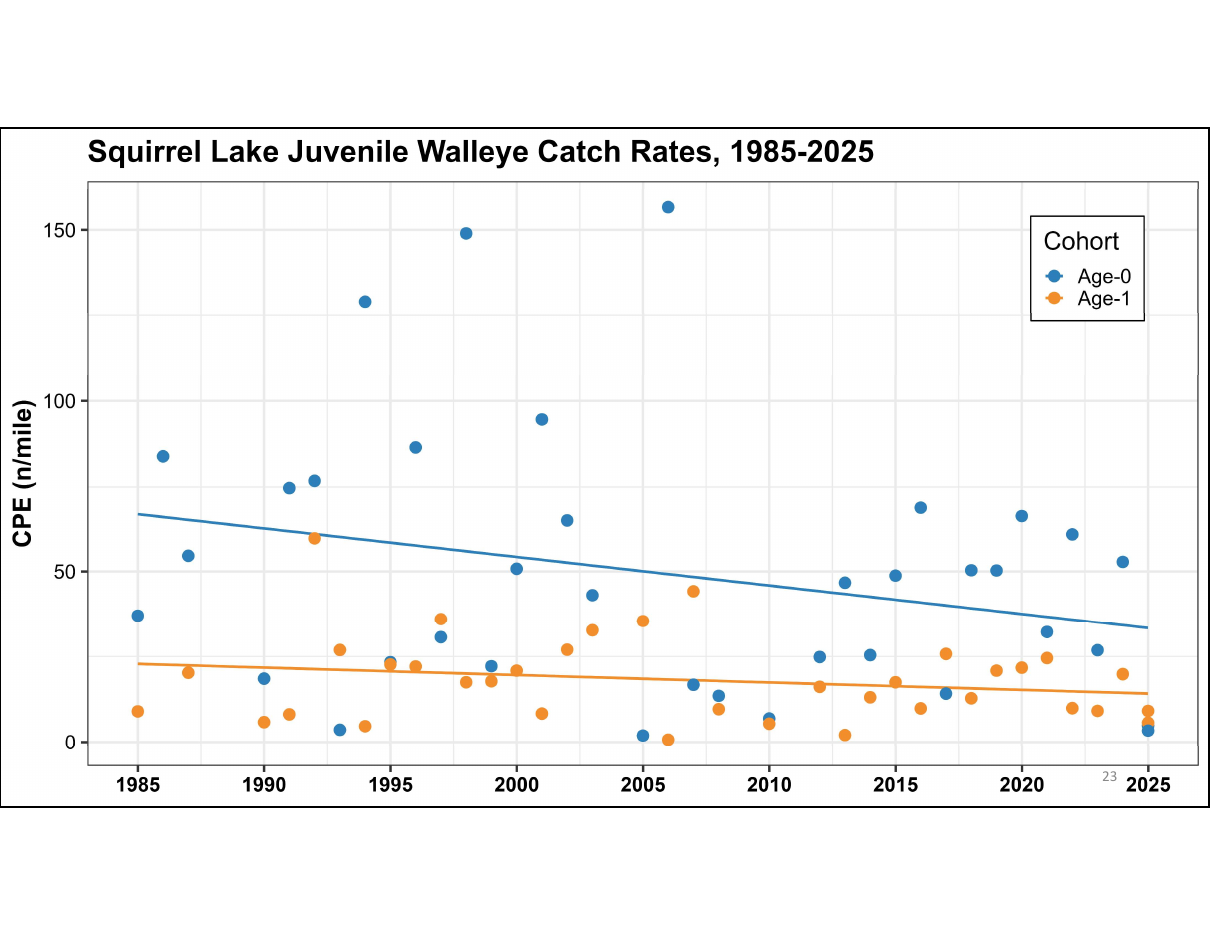
23. Squirrel Lake Juvenile Walleye Catch Rates, 1985-2025
24. Recruitment and Gamefish Surveys
- Conducted each fall during a six-week period beginning the second week of September
- Target juvenile walleyes and gamefish (bass, pike, musky)
- Assess recruitment and survival of juvenile fishes
25. Harvest Considerations
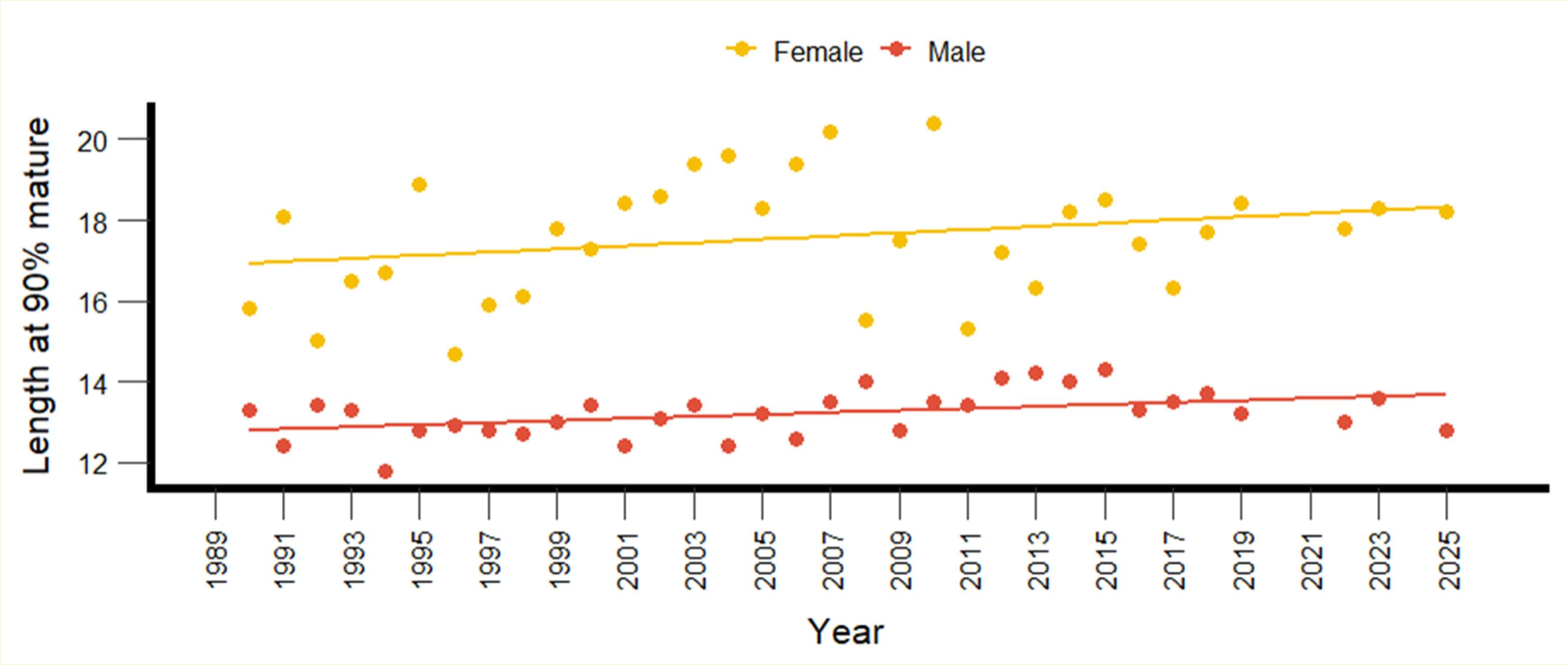
- Allow fish to spawn at least once before being harvested
- Current regulation: No minimum, 1 > 14”
- Squirrel Lake walleyes:
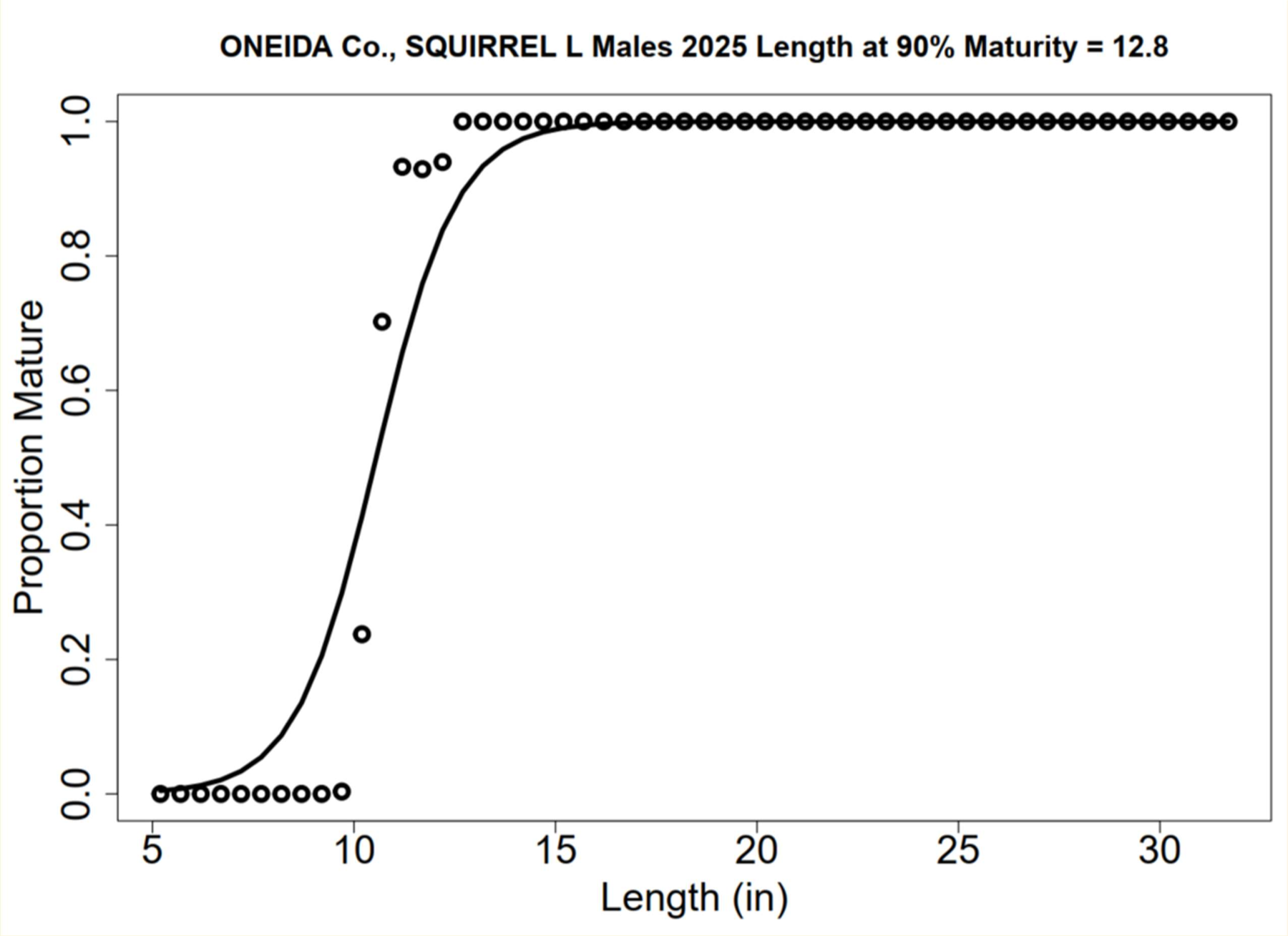
- Males mostly mature by 13”
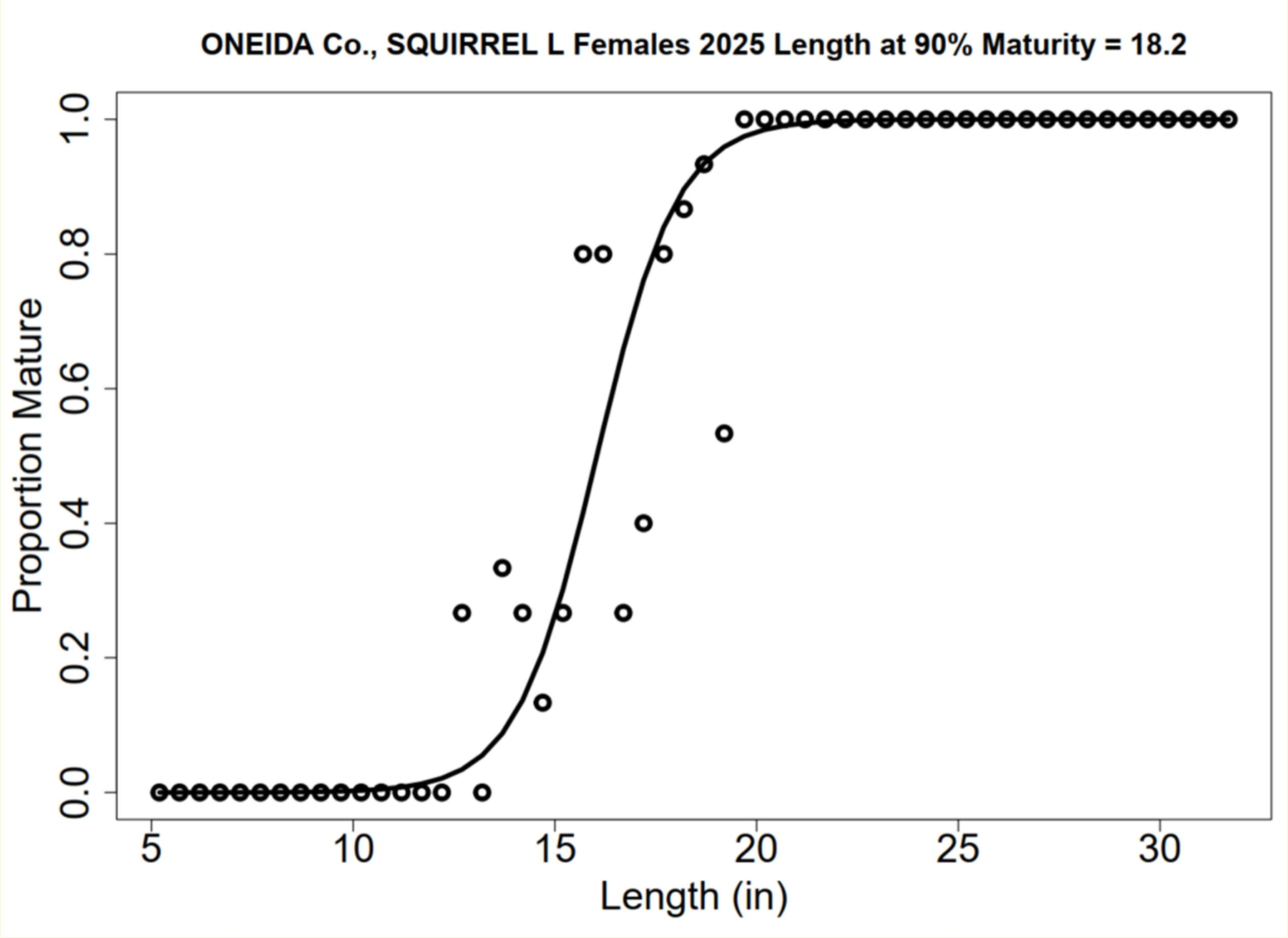
- Females mostly mature by 18”
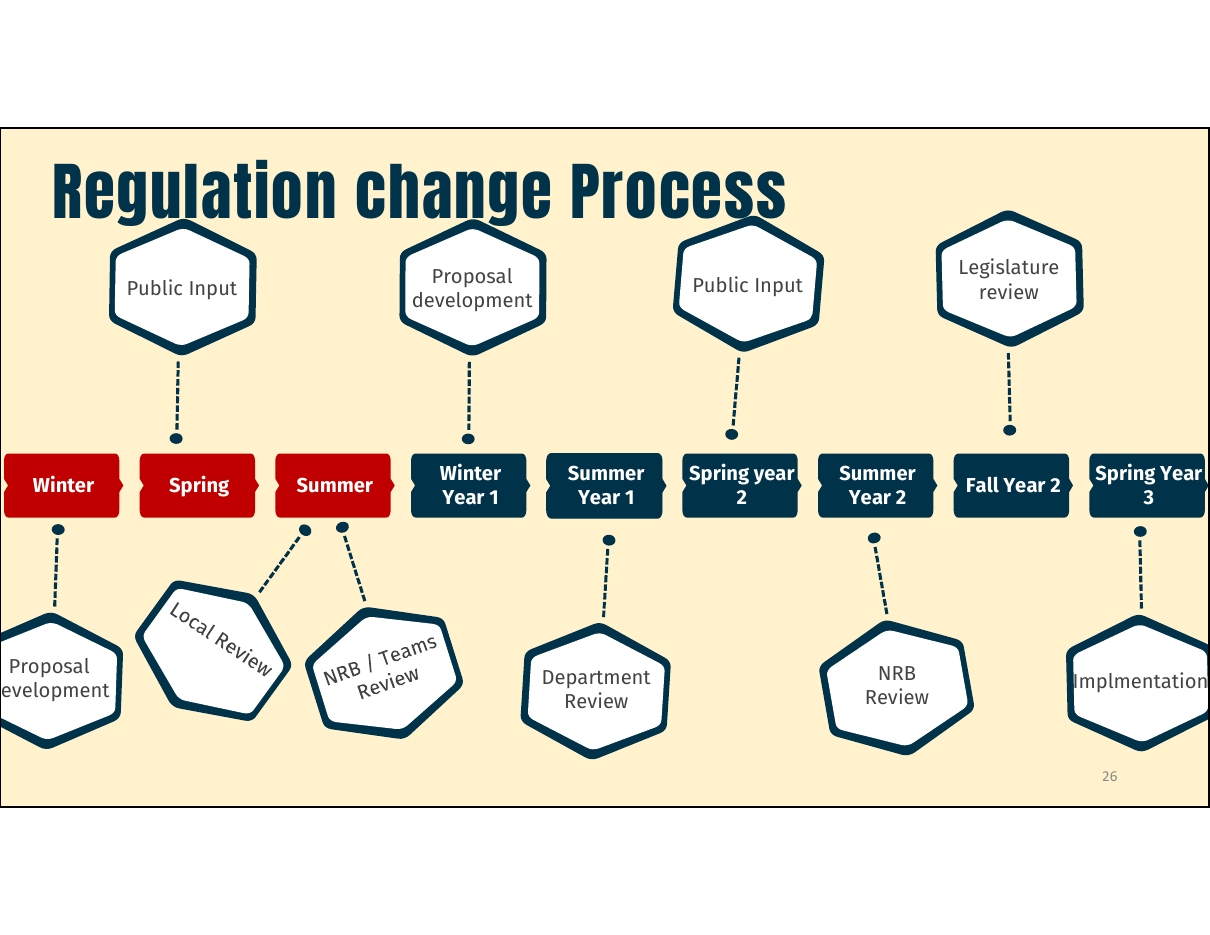
26. Regulation change Process
27. Length at 90% mature
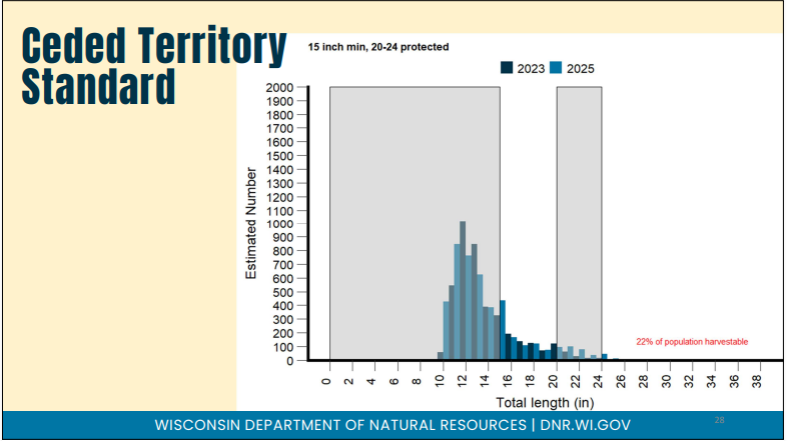
28. Ceded Territory Standard
- 15 inch min, 20-24 protected
- 22% of population harvestable
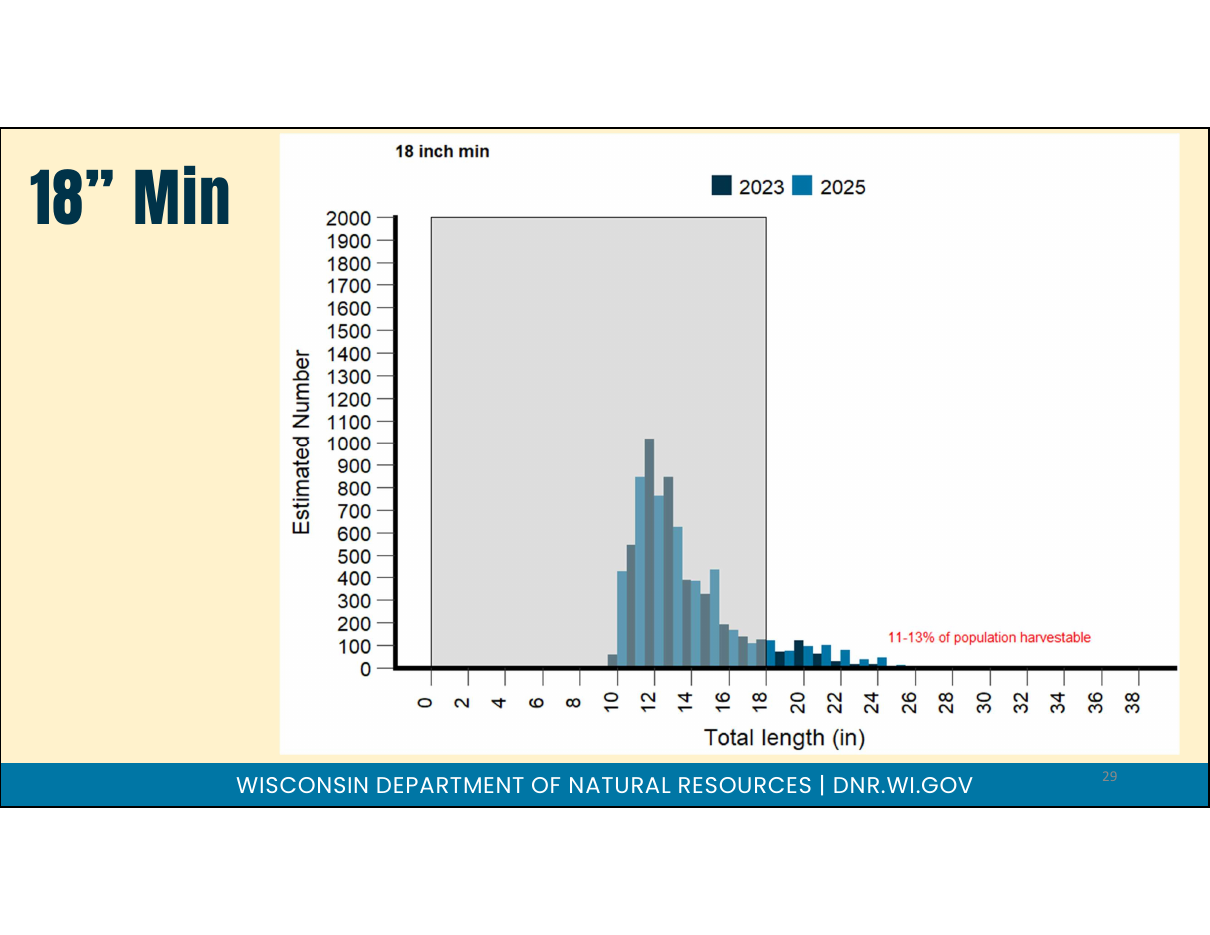
29. 18” Min
- 18 inch min
- 11-13% of population harvestable
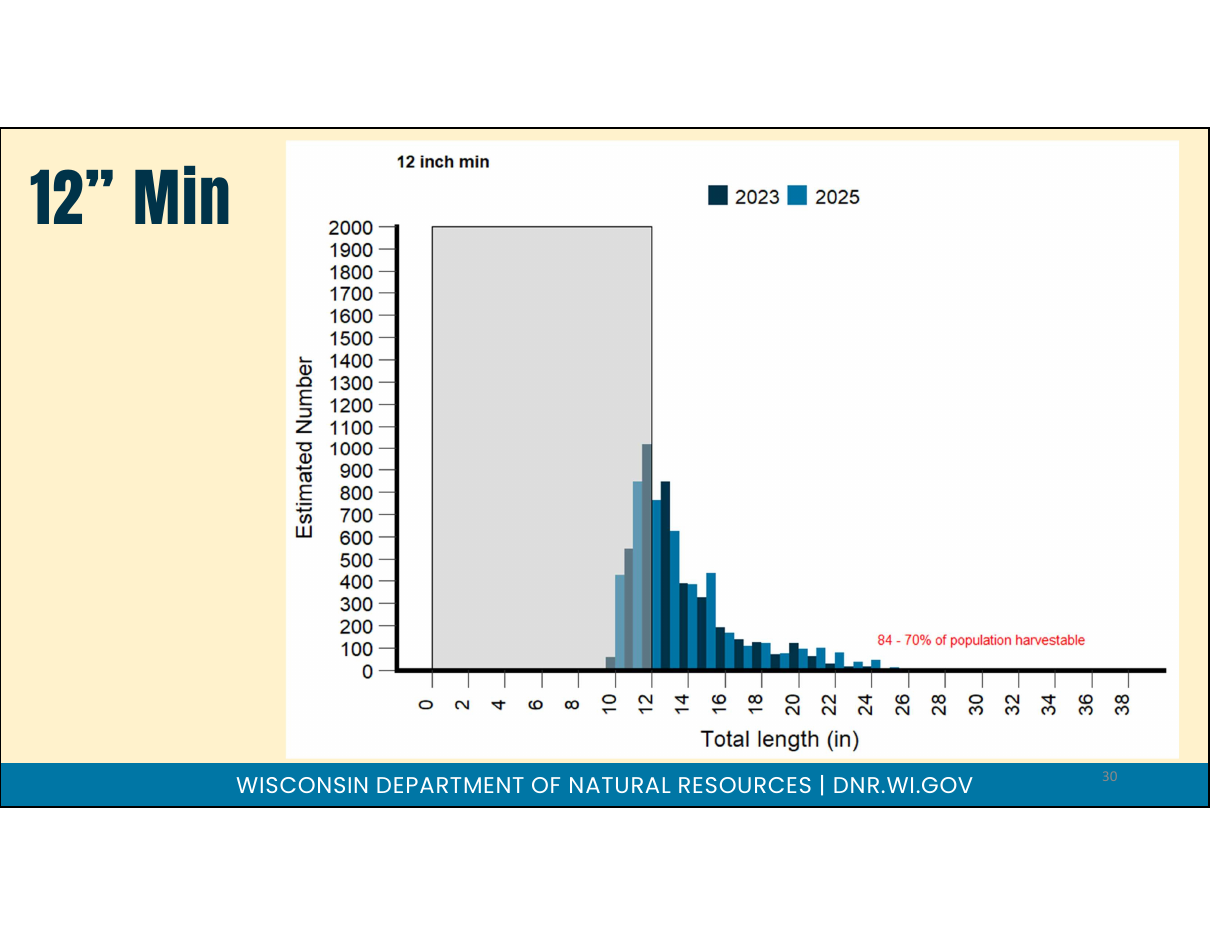
30. 12” Min
- 12 inch min
- 84 - 70% of population harvestable
31. Squirrel Lake Walleye Size Structure, 2017-2025
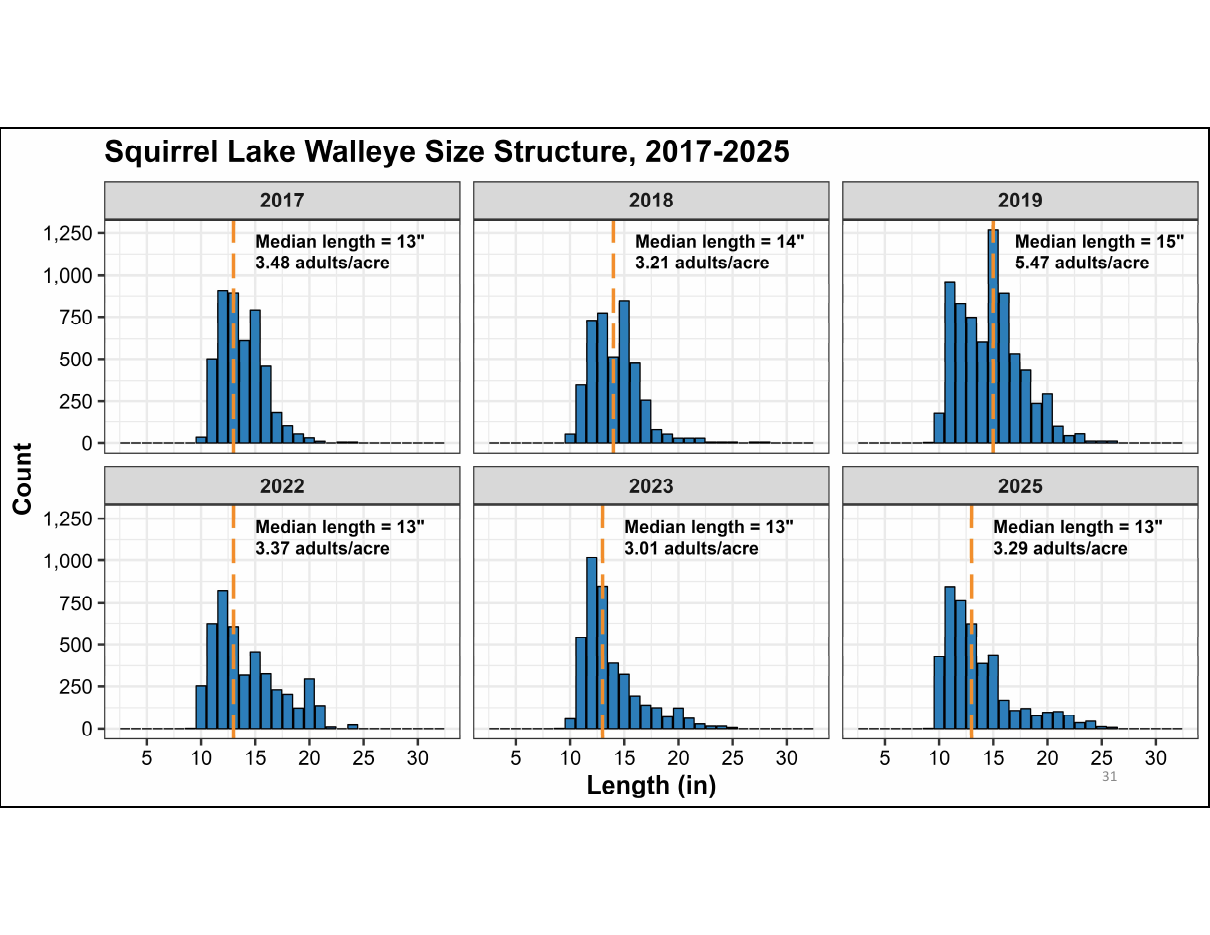
| Year | Median length | Adults/acre |
|---|---|---|
| 2017 | 13" | 3.48 |
| 2018 | 14" | 3.21 |
| 2019 | 15" | 5.47 |
| 2022 | 13" | 3.37 |
| 2023 | 13" | 3.01 |
| 2025 | 13" | 3.29 |
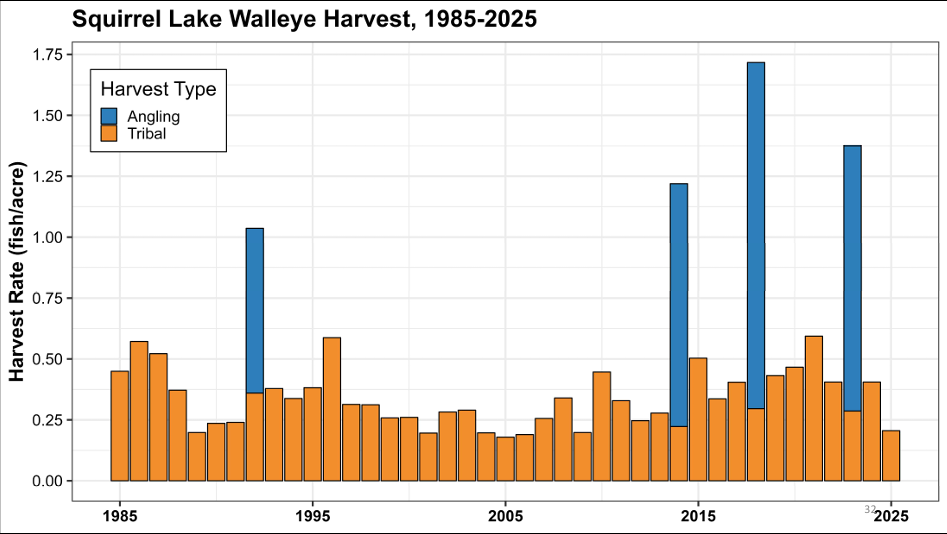
32. Squirrel Lake Walleye Harvest, 1985-2025
33. Nearshore Substrate Survey
- Complete your main shoreline survey on the first page (or more if needed), with header fully completed
- And other portions of the lake (islands, separate stretches of shoreline, etc.) on separate pages with each portion given its own name
34. Shoreline assessments
How will your shore score?
- Entry
- Restoration
- Enhancement
- Protection
Closing Thoughts/Questions
36. Key Takeaways
- Squirrel Lake is a popular fishery with persistent angling opportunity
- Recruitment and adult density have declined
- Harvest-oriented regulations place higher pressure on immature fish
- Angling regulation change and habitat improvements offer greatest “bang-for-the-buck” for current walleye population
37. Additional Resources
- https://healthylakeswi.com/
- https://www.midwestglaciallakes.org
- https://www.keepfishwet.org/walleye-in-our-hands
Additional slides
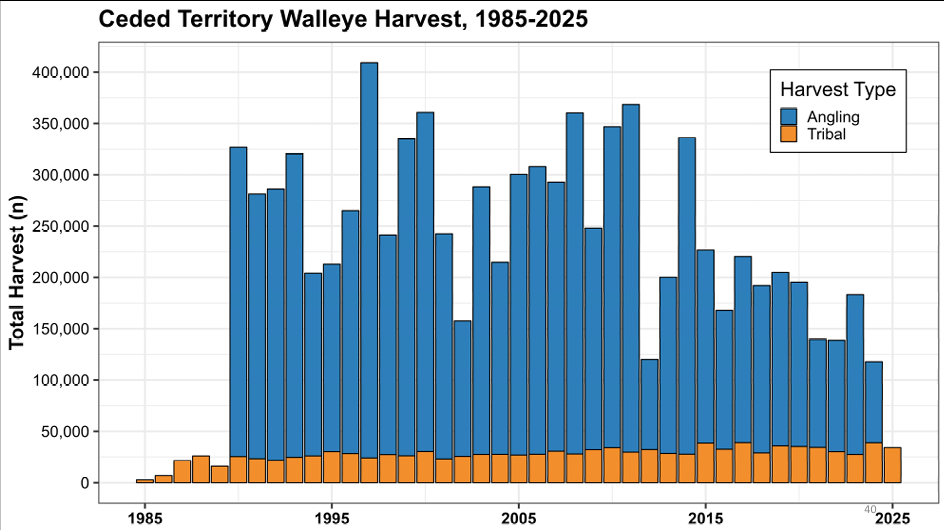
40. Ceded Territory Walleye Harvest, 1985-2025
41–42. ONEIDA Co., SQUIRREL L Males 2025
43–44. ONEIDA Co., SQUIRREL L Females 2025