| Status | In progress for the 2027 season |
|---|---|
| Current regulation | Maximum of 3 per day, no minimum size, only 1 over 14” |
| Proposed regulation | 15” minimum length limit, 20-24” protected slot, only 1 over 24”, 3 daily |
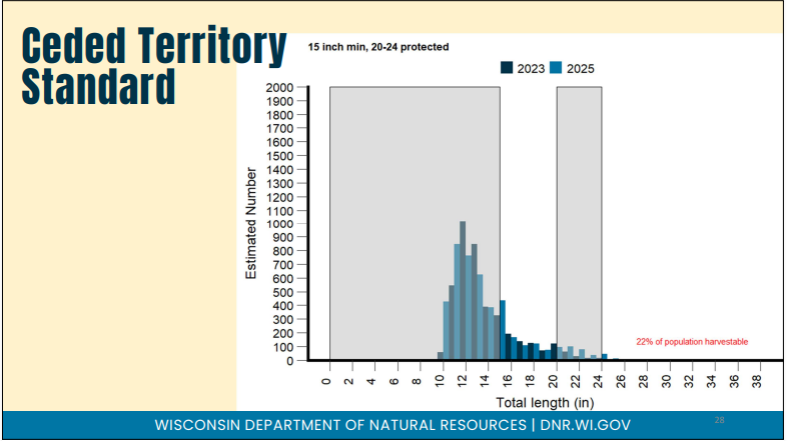
| Harvestable (ceded territory standard) | 22% of population |
| 90% mature | Males by 13”, females by 18” |
| Group vote | All were in favor |
Walleye story
- On Squirrel Lake, 90% of male walleye can reproduce at a length of 13 inches. 90% of female walleye can reproduce at 18 inches.
- The hook and line regulation on Squirrel Lake for the last 40 years is a maximum of 3 walleyes total of 14 inches and below with 1 walleye over 14 inches. This regulation promotes the over harvest of young walleyes not yet to reproductive length. It also drove additional external hook and line fishermen to our lake because they could easily catch and keep small walleyes.
- The ceded territory regulation is a maximum of 3 walleye between 15 inches to 20 inches with 1 over 24 inches. This will allow more walleye to at least reproduce 1 season before harvest. It will also align Squirrel Lake with all other ceded territory lakes.
- The regulation change is in progress for the 2027 season. DNR Fisheries Biologist Nathan Lederman is working through the approval process.
- Many people blame tribal spearing for the decline in the Squirrel Lake walleye population, but that is not true. It is the current hook and line regulation that has been in place for over 40 years that is causing the over harvest of small walleyes not yet to reproductive length.
Source: Bryan Haack, Walleye story
Current and proposed regulation
| Current regulation | Proposed for 2027 | |
|---|---|---|
Daily limit |
Maximum of 3 per day |
3 daily |
Length |
No minimum size |
15” minimum length limit with a 20-24” protected slot |
Larger fish |
Only 1 over 14” |
Only 1 over 24” |
Sources: current regulation, Walleye Special Interest Group Update, June 2026; proposed for 2027, Proposed Walleye Regulation Changes for 2027.
Walleye Special Interest Group
May 14, 2026
- Squirrel Lake walleye regulation – Nathan Lederman DNR Fisheries Biologist for Oneida County
- Nathan opened the discussion about the current walleye regulations on Squirrel Lake and the possibility of changing them.
Source: Walleye Special Interest Group Update, June 2026
June 17, 2026
- The current walleye regulation is driving over harvest walleyes
- The current walleye regulation encourages external lake traffic to keep small walleyes
- As recommended by Nathan and Brandon, allow walleyes to spawn once before harvesting
- Ceded Territory Walleye Regulation:
- Maximum of 3 per day
- Slot size 15” to 20”
- Only 1 over 24”
- The ceded territory walleye regulation allows more walleyes to reach reproductive length before being harvested. 90% of males mature by 13” and 90% of females mature by 18”
- WE IDENTIFIED A PROBLEM CONTRIBUTING TO THE SQUIRREL LAKE WALLEYE POPULATION DECLINE – The current Squirrel Lake hook and line walleye regulation promotes the over harvest of young walleyes.
- THE SOLUTION – Change the walleye regulation to the ceded territory standard
- WE TOOK A VOTE – All were in favor of the regulation change
- What is next – Nathan will create a Squirrel Lake fish survey. The survey will get posted to get feedback from the community. Nathan will progress the regulation change through the formal DNR process for approval to be implemented next year.
Source: Walleye Special Interest Group Update, June 2026
Harvest Considerations
- Allow fish to spawn at least once before being harvested
- Current regulation: No minimum, 1 > 14”
- Squirrel Lake walleyes: Males mostly mature by 13” | Females mostly mature by 18”
Source: GLIFWC, June 17, 2026
Key Takeaways
- Harvest-oriented regulations place higher pressure on immature fish
- Angling regulation change and habitat improvements offer greatest “bang-for-the-buck” for current walleye population
Source: GLIFWC, June 17, 2026
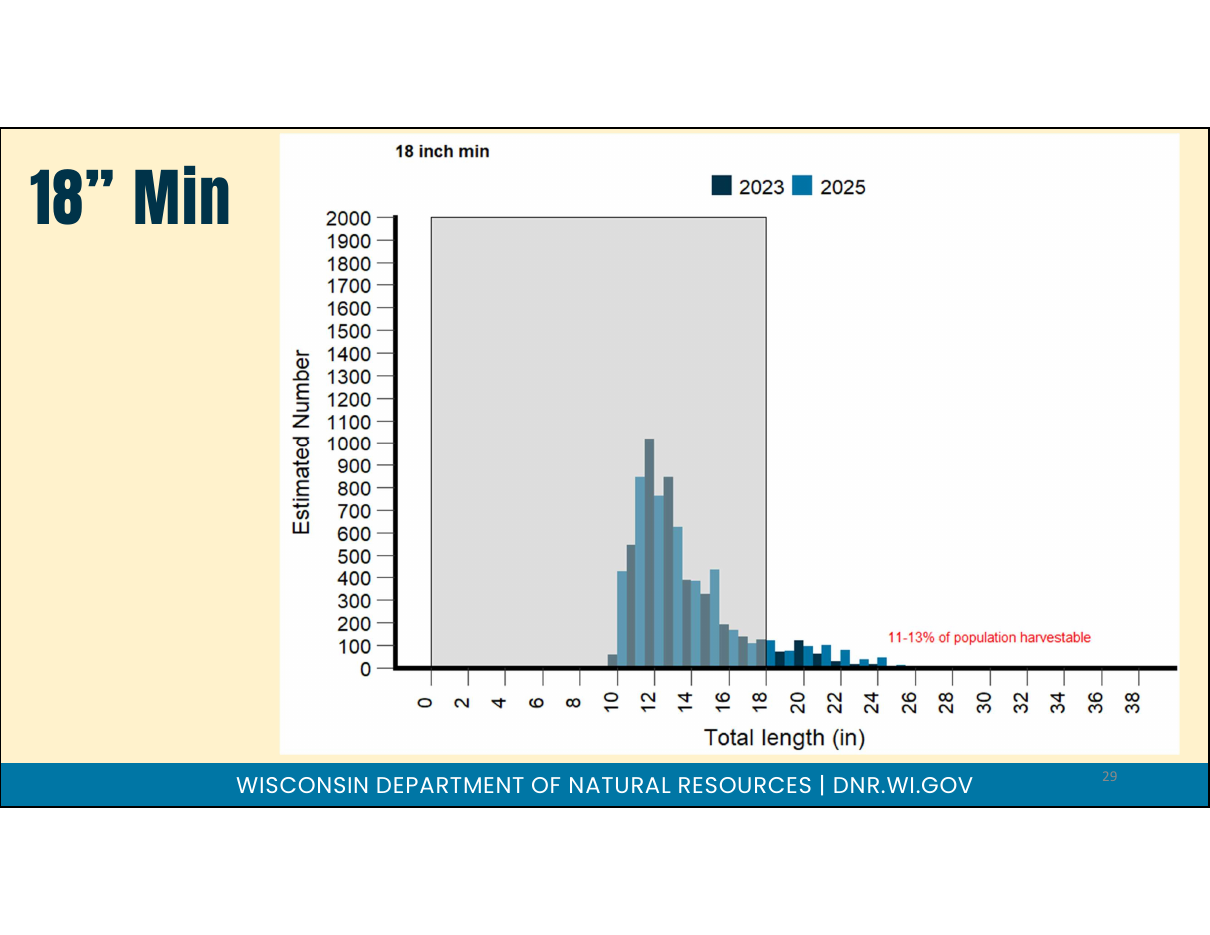
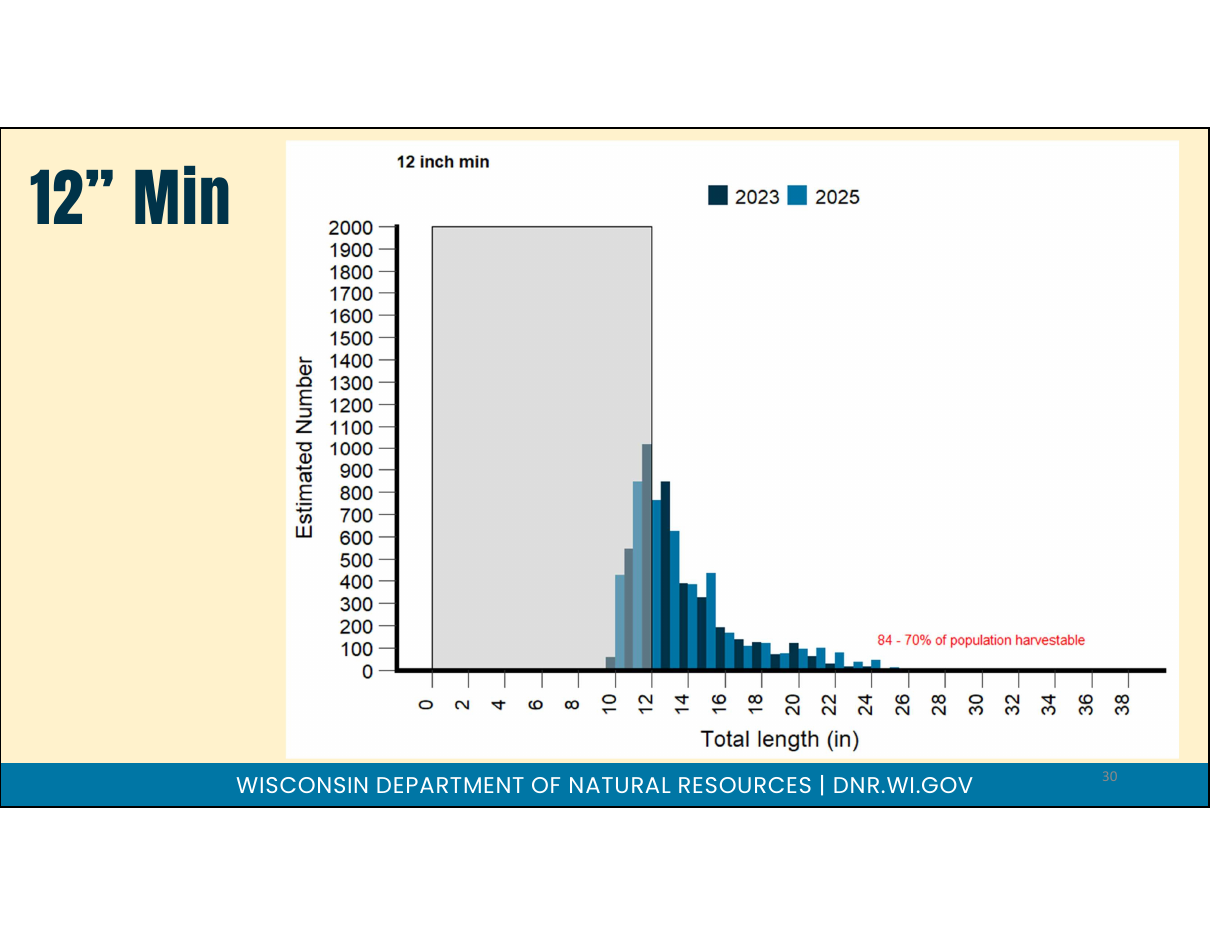
Length limit scenarios
| Chart | Printed on chart |
|---|---|
| Ceded Territory Standard (15 inch min, 20-24 protected) | 22% of population harvestable |
| 18” Min | 11-13% of population harvestable |
| 12” Min | 84 - 70% of population harvestable |
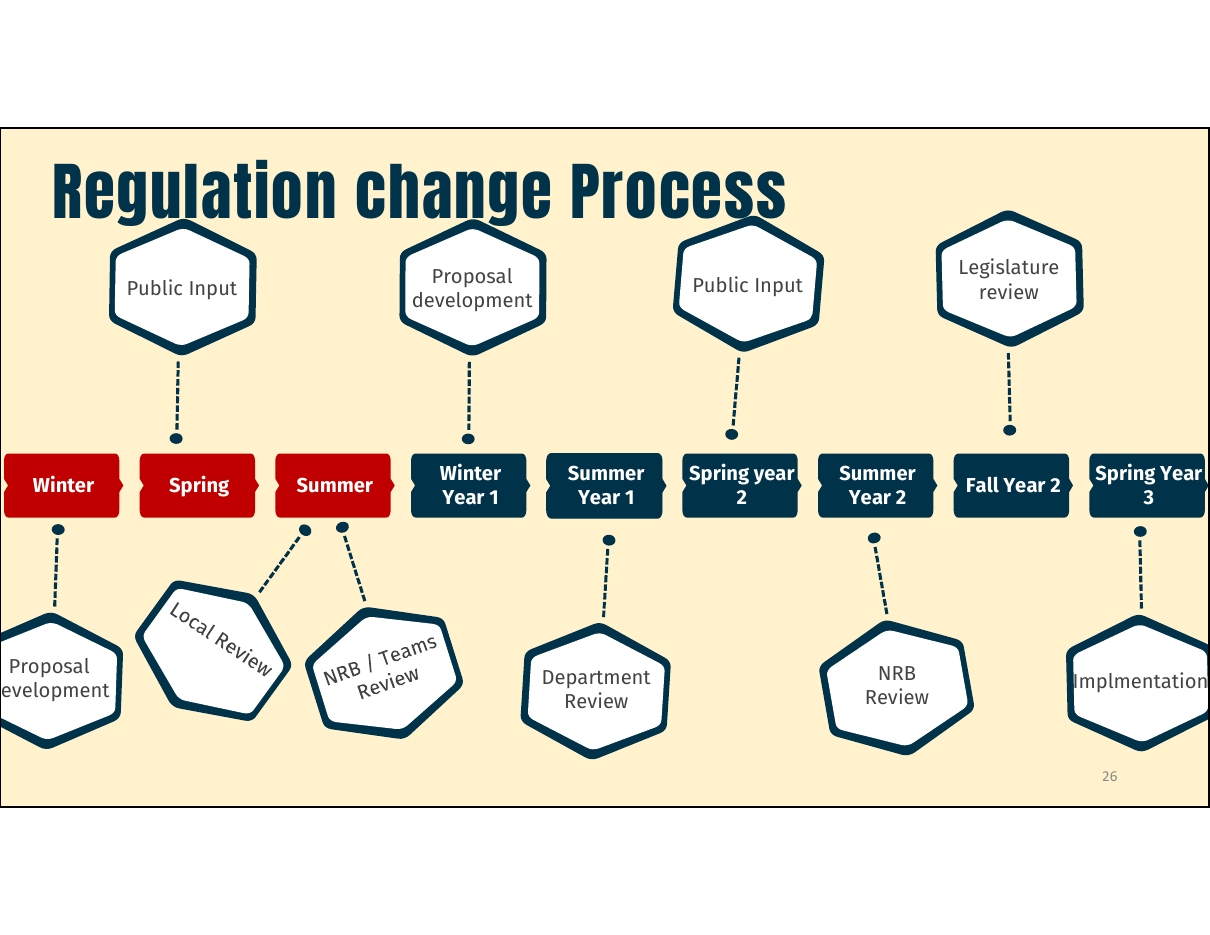
Regulation change Process
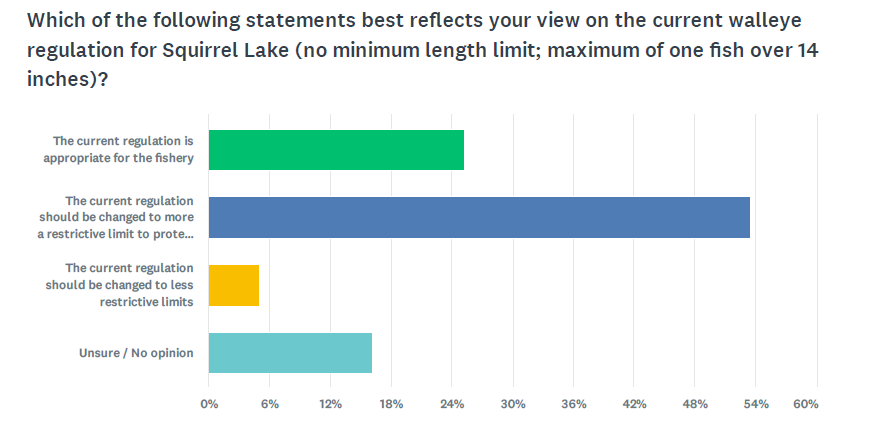
User Survey
Resources
- · Squirrel Lake Group Meeting · Wisconsin DNR and GLIFWC
- · Squirrel Lake Walleye Special Interest Group Update · Squirrel Lake Walleye Special Interest Group
- · Tribal Harvest Management and Status of Squirrel Lake Walleye Fishery · GLIFWC
- · Proposed Walleye Regulation Changes for 2027