 | |
| Adult density (2025) | 3.29 adults/acre |
|---|---|
| Males, length at 90% maturity (2025) | 12.8 in |
| Females, length at 90% maturity (2025) | 18.2 in |
| Current regulation | Maximum of 3 per day, no minimum size, only 1 over 14” |
| Proposed for 2027 | 15” minimum, 20-24” protected slot, only 1 over 24”, 3 daily |
| Harvest, 2014, 2018 and 2023 combined | Angling 82%, Tribal 18% |
Walleye story
- The reason I started the Walleye special interest group was because I felt my personal annual walleye catch was declining. I needed to find out if it was my imagination or true
- The walleye population graph shows a decline in population over the years. So my hunch was true.
- The harvest graph shows the annual tribal harvest every year. The tribe has the legal right of half the safe harvest. The hook and line creel harvest estimates in 2014, 2018, 2023 show a harvest significantly higher than the tribal harvest. For safe harvest, they should be the same. From the 3 years listed above, the tribal harvest is less than 20% of the total annually. The hook and line are greater than 80% of the harvest. This is way too high.
- On Squirrel Lake, 90% of male walleye can reproduce at a length of 13 inches. 90% of female walleye can reproduce at 18 inches.
- The hook and line regulation on Squirrel Lake for the last 40 years is a maximum of 3 walleyes total of 14 inches and below with 1 walleye over 14 inches. This regulation promotes the over harvest of young walleyes not yet to reproductive length. It also drove additional external hook and line fishermen to our lake because they could easily catch and keep small walleyes.
- The ceded territory regulation is a maximum of 3 walleye between 15 inches to 20 inches with 1 over 24 inches. This will allow more walleye to at least reproduce 1 season before harvest. It will also align Squirrel Lake with all other ceded territory lakes.
- The regulation change is in progress for the 2027 season. DNR Fisheries Biologist Nathan Lederman is working through the approval process.
- Many people blame tribal spearing for the decline in the Squirrel Lake walleye population, but that is not true. It is the current hook and line regulation that has been in place for over 40 years that is causing the over harvest of small walleyes not yet to reproductive length.
- Squirrel Lake has excellent walleye natural reproduction. Up to 73% of our shoreline is good for walleye spawning. This is one of the very best in Oneida County.
- There are other things that contribute to the decline in the walleye population, like global warming, disruption to spawning habitat, lake shore clearing, etc. We have two projects that will help protect spawning habitat - the placement of no wake buoys around the two best spawning areas and shoreline improvement to better support our fishery.
Bryan Haack, Squirrel Lake resident
Graphs: Population · Harvest
Population
- Squirrel Lake is in the top 5 naturally producing walleye lakes in Oneida County.
Source: Walleye Special Interest Group Update, June 2026
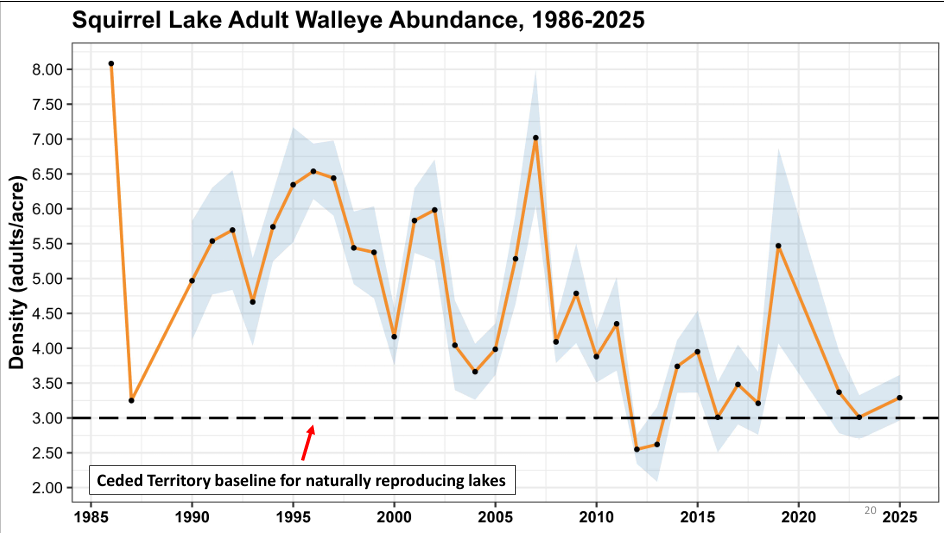
- This graph shows the decline in walleye population from 1985 to 2025
- It is normal to have swings in population from year to year
- We do not want to go below the ceded territory baseline
- The trend shows confirmation of the perception of walleye population decline.
- We also discussed the year 2019 and that variations are common.
Source: Walleye Special Interest Group Update, June 2026
Key Takeaways
- Squirrel Lake is a popular fishery with persistent angling opportunity
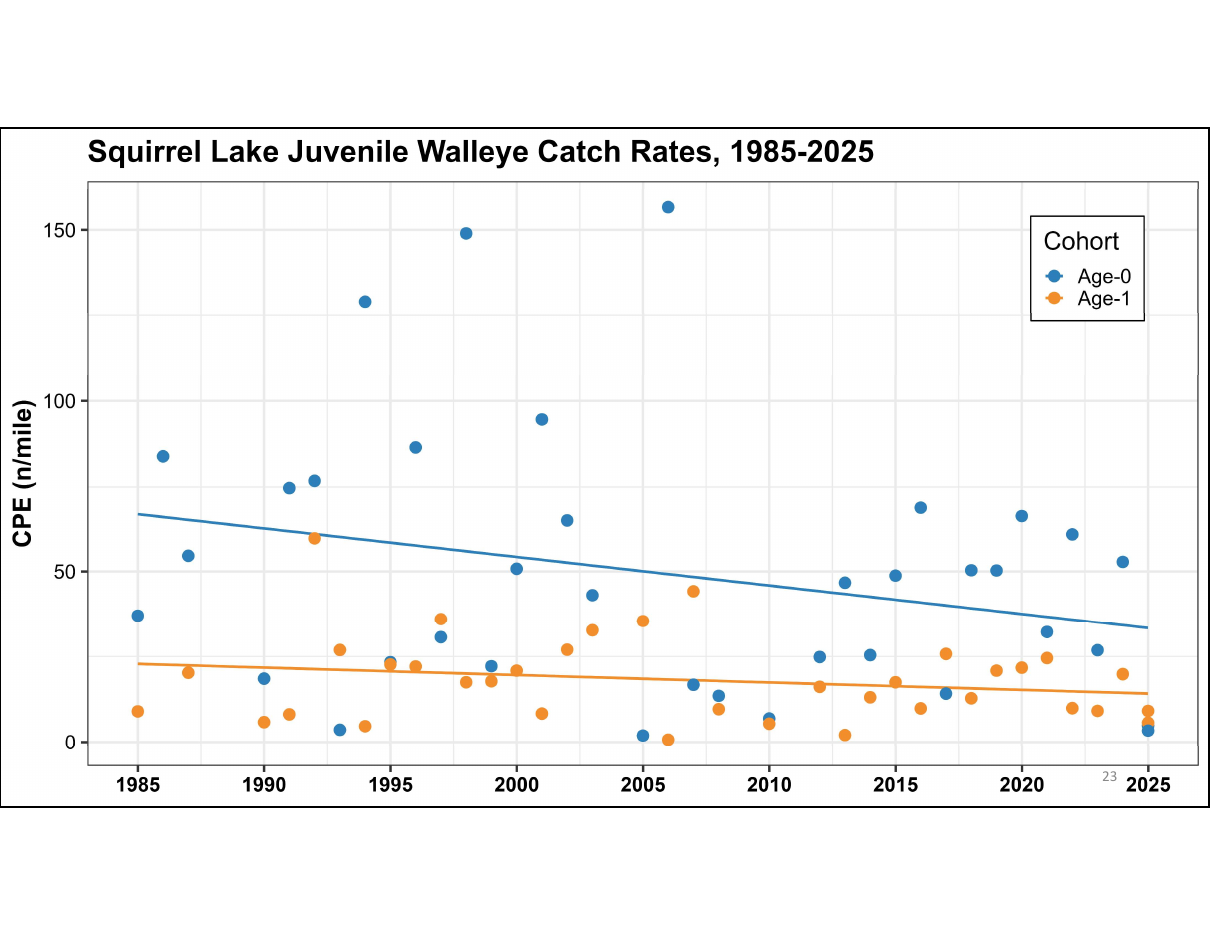
- Recruitment and adult density have declined
- Harvest-oriented regulations place higher pressure on immature fish
- Angling regulation change and habitat improvements offer greatest "bang-for-the-buck" for current walleye population
Source: GLIFWC, June 17, 2026
Young fish
See also: Recruitment and Gamefish Surveys
Size and maturity
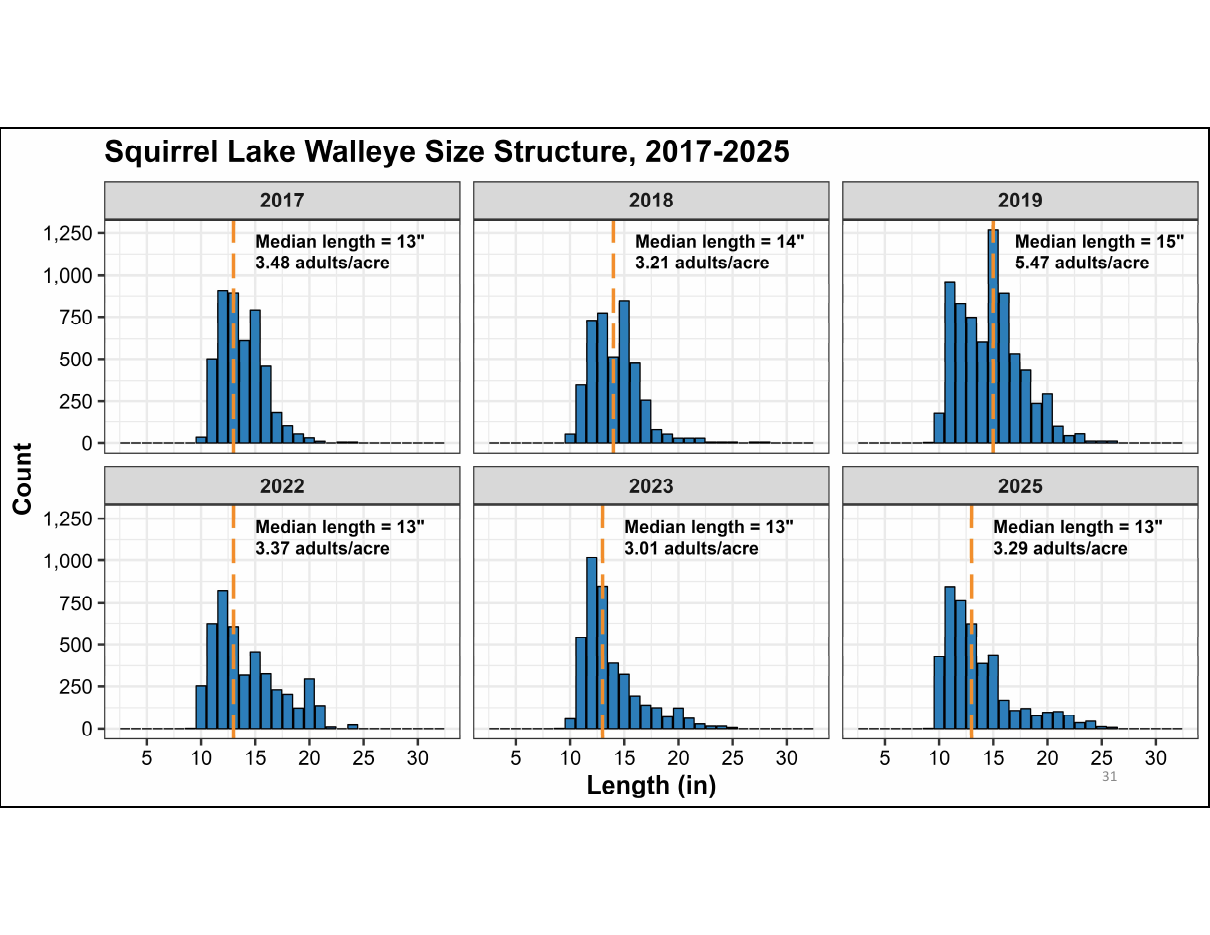
| Year | Median length | Adults/acre |
|---|---|---|
| 2017 | 13” | 3.48 |
| 2018 | 14” | 3.21 |
| 2019 | 15” | 5.47 |
| 2022 | 13” | 3.37 |
| 2023 | 13” | 3.01 |
| 2025 | 13” | 3.29 |
Source: GLIFWC, June 17, 2026
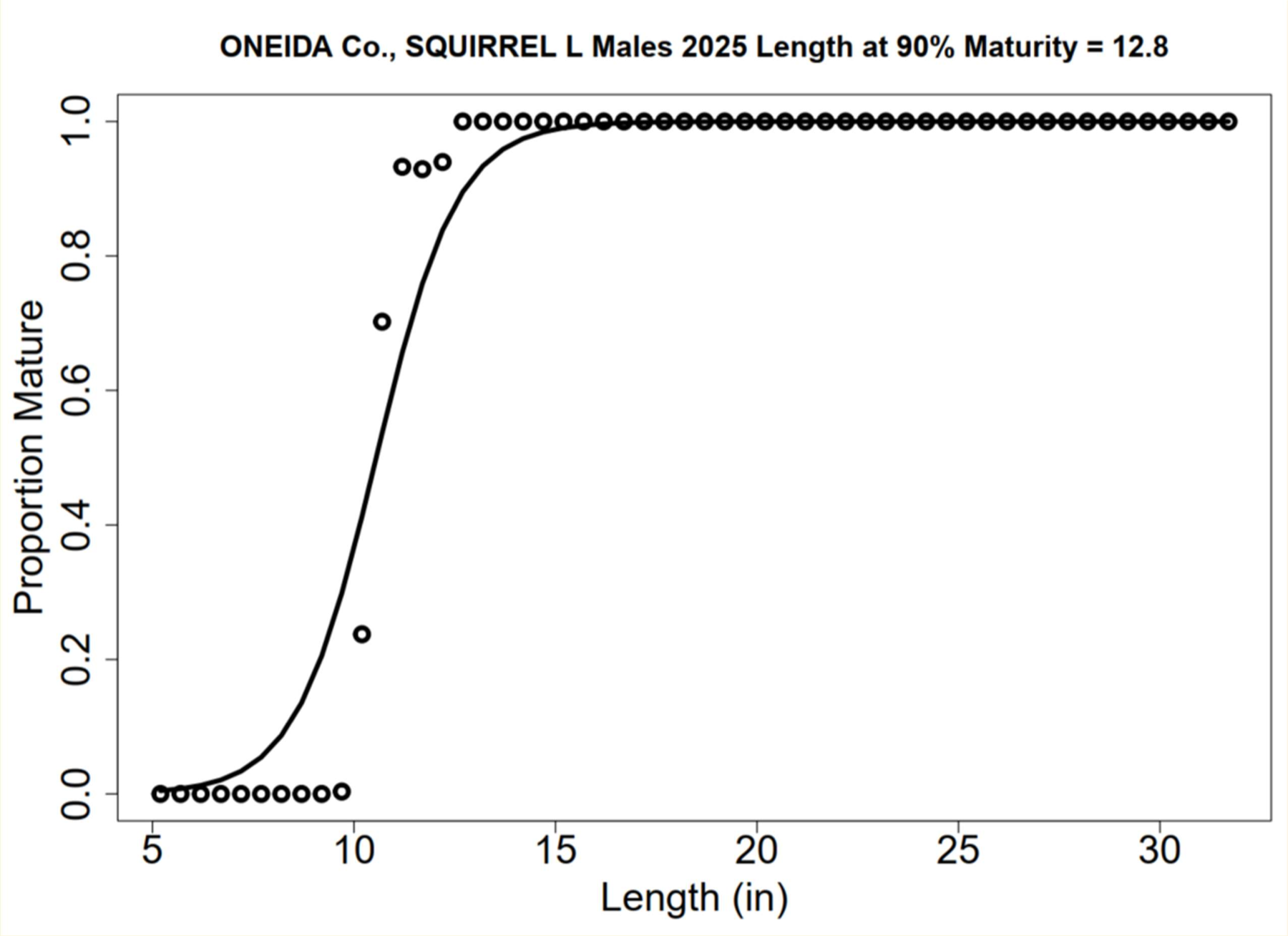
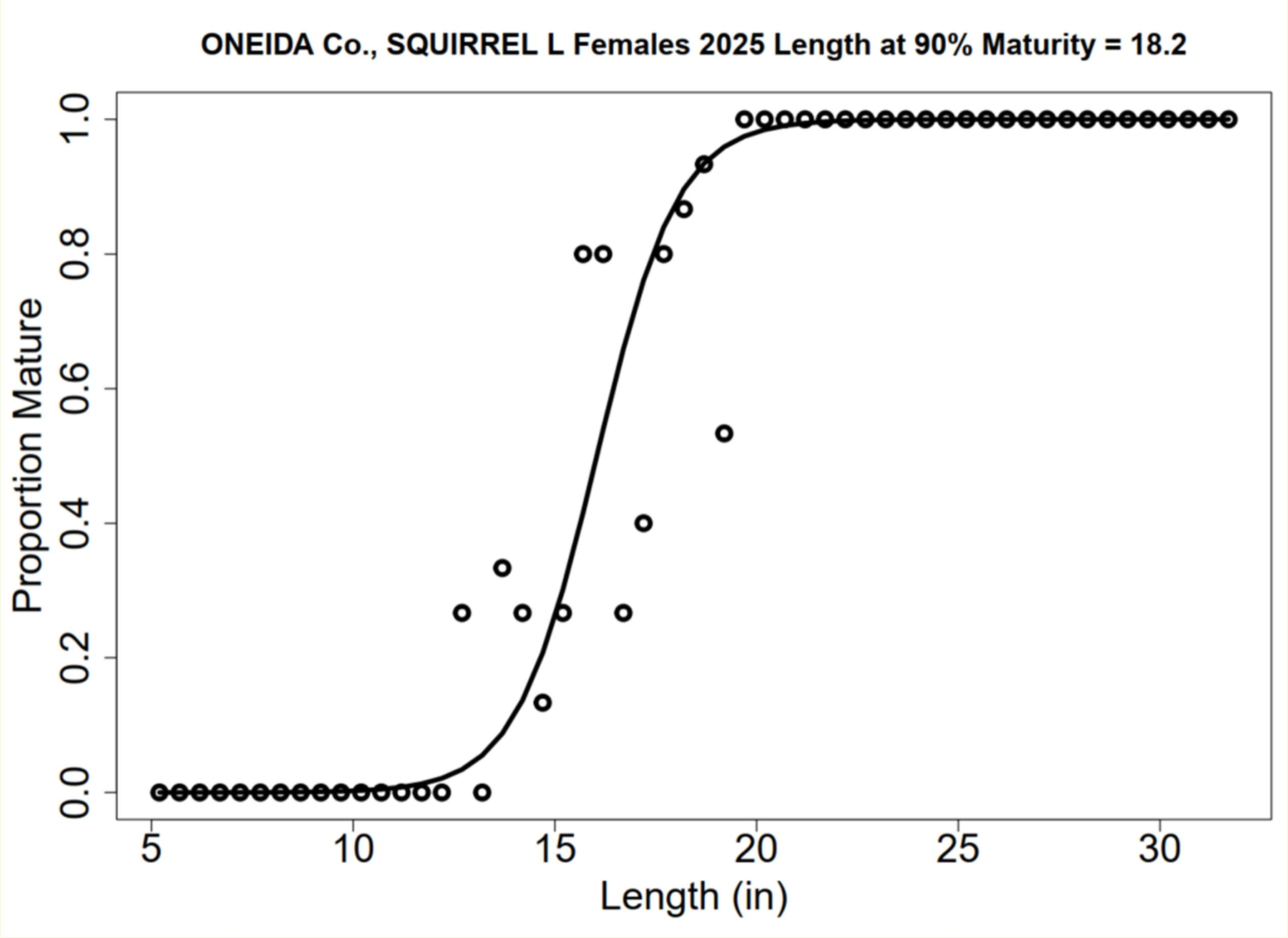
- 90% of males mature by 13” and 90% of females mature by 18”
Source: Walleye Special Interest Group Update, June 2026
Harvest
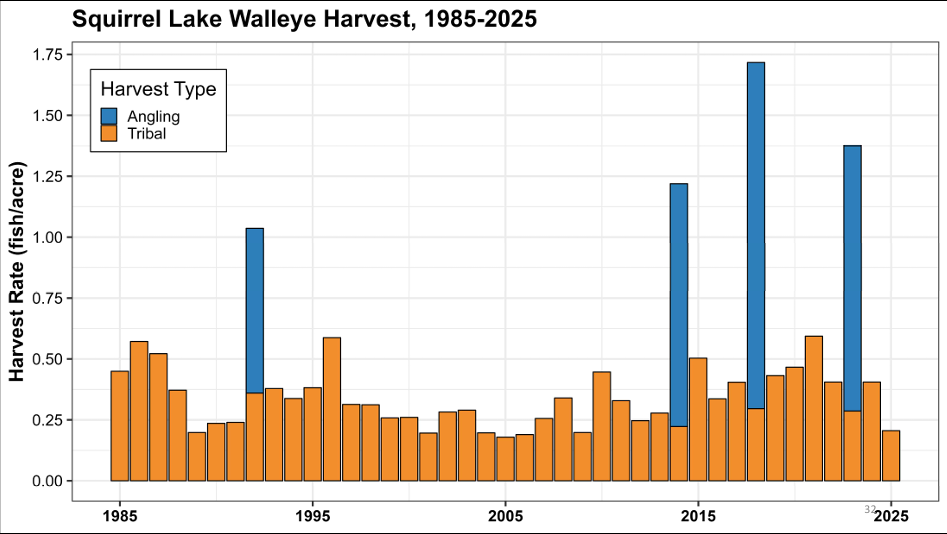
- I used the combined Angling and Tribal years of 2014, 2018 and 2023
- The Angling harvest is 82% of the total
- The Tribal harvest is 18% of the total
- We need to investigate why the Angling harvest is so high
- The next walleye census is scheduled for 2027
Source: Walleye Special Interest Group Update, June 2026
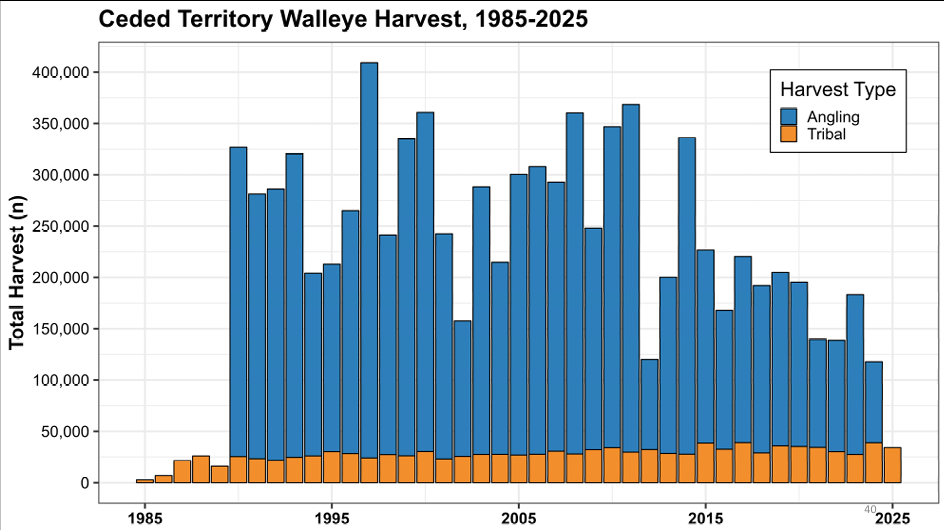
- This graph shows the entire ceded territory harvest split between tribal and angling.
- It was used as confirmation that the Squirrel Lake results look similar
Source: Walleye Special Interest Group Update, June 2026
Myth Number 2 – Tribal spearing is the cause of the Squirrel Lake walleye population decline.
This is not true. Tribal spearing accounts for less than 20% of the annual walleye harvest on Squirrel Lake and across the ceded territory. … For Squirrel Lake, the current walleye regulations encourage over harvesting.
Regulation
| Current regulation | Proposed for 2027 | |
|---|---|---|
Daily limit |
Maximum of 3 per day |
3 daily |
Minimum length |
No minimum size |
15” minimum length limit |
Protected slot |
– |
20-24” protected slot |
Only 1 over |
14” |
24” |
Sources: current regulation, Walleye Special Interest Group Update, June 2026; proposed for 2027, Proposed Walleye Regulation Changes for 2027.
- The current walleye regulation is driving over harvest walleyes
- The current walleye regulation encourages external lake traffic to keep small walleyes
- As recommended by Nathan and Brandon, allow walleyes to spawn once before harvesting
- The ceded territory walleye regulation allows more walleyes to reach reproductive length before being harvested.
Source: Walleye Special Interest Group Update, June 2026
See also: Walleye Regulation Change for 2027
Spawning habitat
- Nathan and Brandon are doing a complete shoreline assessment to identify prime walleye spawning sites
- They will come back with suggestions to improve these sites
- This happened this morning (June 25th) with two lake members assisting (Wayne Krantz and Glen Isensee)
- Nathan and Brandon may have other suggestions in the future
Source: Walleye Special Interest Group Update, June 2026
See also: Shoreline, No Wake Buoys Protecting Prime Walleye Spawning Sites, Shoreline Habitat Education and Improvement
Stocking and hatchery
Stocking
- Nathan suggested we don’t pursue stocking because the results have been poor and it is a costly alternative.
Portable Fish Hatchery
- Two times we tried to schedule Al Luke from Headwaters Hatchery and he cancelled both times
- The mobile hatchery is not working on the Minocqua chain. Millions of eggs have been hatched but survival has been very poor.
- The results of the mobile hatcheries are low, the expense and labor are high
- The Squirrel Lake Walleye Special Interest Group voted not to pursue the mobile hatchery at this time
Source: Walleye Special Interest Group Update, June 2026
Contributing factors
There are many contributing factors to the walleye population decline (e.g. shoreline development, global warming, increased bass population, Northern Pike predation, etc., etc.). We will continue to investigate other walleye population initiatives.
Tribal harvest management
Spearing and Netting Overview
- Harvesters must possess tribal ID and permit while spearing or netting
- Permits generally issued first-come, first-serve at tribal registration station or boat landing
- Bag limits per permit established by Tribe
- Creel clerks must be present at the boat landing for either activity to take place
- 20” maximum; one fish between 20-24”, and one of any size per permit
- Creel teams count, measure, and determine sex of catch
- Unused permits must be returned to designated monitoring location
Source: GLIFWC, June 17, 2026
Safe Harvest
- Safe harvest is meant to be conservative and is based on population data
- Tribal quotas are a percentage of safe harvest
- Tribal harvest is fully monitored when spearing and netting occur
- Each fish is counted and quotas tracked
- Safe harvest in Wisconsin is derived such that combined tribal and angling exploitation should not exceed 35% of adult stock
- Tribes or GLIFWC Biological Services Director may close a lake to tribal harvest when necessary
Source: GLIFWC, June 17, 2026
See also: Great Lakes Indian Fish & Wildlife Commission
Safe handling of walleye
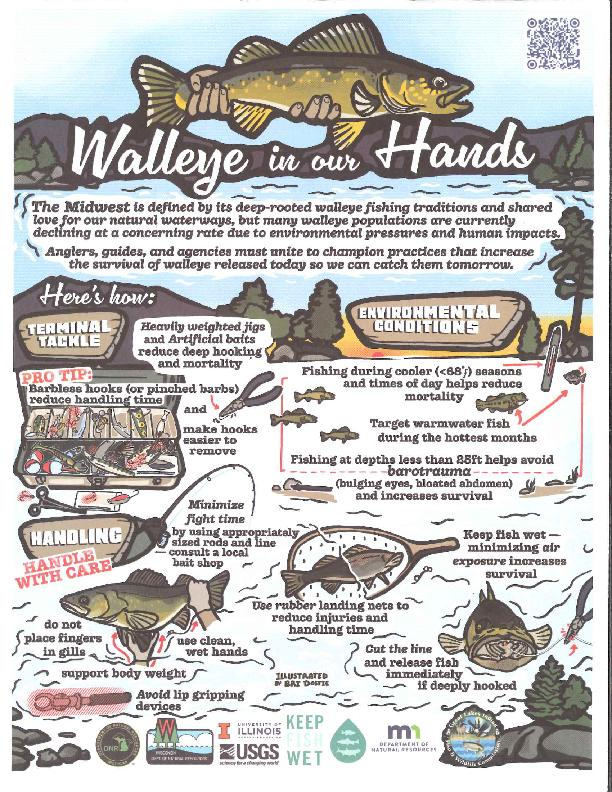
Terminal tackle
- Heavily weighted jigs and Artificial baits reduce deep hooking and mortality
- PRO TIP: Barbless hooks (or pinched barbs) reduce handling time and make hooks easier to remove
Environmental conditions
- Fishing during cooler (<68°F) seasons and times of day helps reduce mortality
- Target warmwater fish during the hottest months
- Fishing at depths less than 25ft helps avoid barotrauma (bulging eyes, bloated abdomen) and increases survival
Handling
- Minimize fight time by using appropriately sized rods and line - consult a local bait shop
- Keep fish wet - minimizing air exposure increases survival
- Use rubber landing nets to reduce injuries and handling time
- do not place fingers in gills
- use clean, wet hands
- support body weight
- Avoid lip gripping devices
- Cut the line and release fish immediately if deeply hooked
Source: Wisconsin DNR, August 26, 2026
See also: Walleye in our Hands, Lake Temperature Monitor
Report tagged fish
Report Your Tagged Fish! www.glifwc.org/report-tagged-fish
Source: GLIFWC, June 17, 2026
See also: Report tagged fish
Walleye Special Interest Group
- We felt the walleye fishery was declining and didn’t want the population to decline to the point of no return.
- We now have 108 members on the Squirrel Lake Walleye Initiative Facebook group site. Our membership includes lake residents, non-residents, external lake users, a DNR fisheries biologist, a GLIFWC fisheries biologist and anyone who requested to join.
Resources
- · Squirrel Lake Group Meeting · Wisconsin DNR and GLIFWC
- · Squirrel Lake Walleye Special Interest Group Update · Squirrel Lake Walleye Special Interest Group
- · Tribal Harvest Management and Status of Squirrel Lake Walleye Fishery · GLIFWC
- · Proposed Walleye Regulation Changes for 2027